 e73a7e7bfc
Summary:
Fixes the coordinate indexing used by frustum face culling, and keeps the now-live culling from deleting faces that straddle the camera plane.

`face_verts` has shape `[F, 3, 3]`, where the last two dimensions are the vertex and the xyz coordinate. `_get_culled_faces` indexed it as `face_verts[:, axis]`, which picks one whole vertex out of every face rather than one coordinate out of all three vertices, so `verts_clipped.sum(1) == 3` was asking whether a single vertex was outside the plane on all three axes at once. Every other access in the file agrees with the documented layout — `clip_faces` reads z as `face_verts_unclipped[:, :, 2]`. The fix selects the coordinate with `face_verts[:, :, axis]` and reduces with `all(dim=1)`, which states the documented condition directly: a face is culled only when all three of its vertices lie outside the same plane.

Because the old indexing almost never fired, this is the first time frustum culling does real work, and that exposes a second problem. `_get_culled_faces` runs on the unclipped face verts, and `rasterize_meshes` passes `left`/`right`/`top`/`bottom` in NDC while z stays in world space. The perspective divide mirrors vertices behind the camera through the origin, so a triangle straddling the camera plane can have all 3 projected vertices outside the same xy plane while the part of it in front of the camera still crosses the frustum. At fov 90, for instance, the vertices `(-1.1, 0, 1)`, `(100, 0, -1)` and `(100, 0.1, -1)` all project to x < -1, yet the edge from the first to the second passes through x = 0 while still at z > 0. Culled faces are classified as case 2 and dropped outright, before z clipping could have salvaged them, so that triangle would vanish from the render.

xy culling is therefore now applied only to faces lying entirely in front of the clipping plane (`z >= z_clip_value`, or `z > 0` when no clip value is set), and only when `perspective_correct` is set; straddling faces are left to the z clipping step. Orthographic projections keep usable xy coordinates behind the camera and are unaffected, as is culling on the z axis, which uses world coordinates throughout. The `frustum.cull` check also moves out of the per-plane loop into an early return.

For blast radius: `RasterizationSettings.cull_to_frustum` defaults to `False`, but `rasterize_meshes_python` defaults it to `True`.

Fixes https://github.com/facebookresearch/pytorch3d/issues/1936.

Pull Request resolved: https://github.com/facebookresearch/pytorch3d/pull/2044

Test Plan:
`buck2 test fbcode//vision/fair/pytorch3d:tests`, filtered to the culling and rendering tests (`--regex 'test_render_meshes_clipped|test_render_meshes\b|clip'`): 34 passed, 0 failed, 8 skipped. The skips are the OpenGL-only tests.

Two new unit tests over `_get_culled_faces`:

- `test_cull_faces_uses_coordinate_axis` — for each of the 6 planes, a face whose 3 vertices all lie outside it is culled; and a face intersecting the left plane stays visible for 3 different vertex orders. Fails on the old `face_verts[:, axis]` indexing.
- `test_cull_faces_straddling_perspective_camera` — a face with one vertex in front of the camera and two behind it, all 3 projecting outside the left plane, is not culled under a perspective projection (with and without a `z_clip_value`) but is culled under an orthographic one; and z-axis culling still fires for a face lying entirely behind `znear`. Negative control: with the xy gating disabled and nothing else changed, this test fails on 2 assertions, so it pins the new behaviour rather than restating it.

`arc lint` on `pytorch3d/renderer/mesh/clip.py` and `tests/test_render_meshes_clipped.py`: no issues.

Reviewed By: MichaelRamamonjisoa

Differential Revision: D117200371

Pulled By: bottler

fbshipit-source-id: 99422fc69f4f5725bd82f6af205a0a333a4aef40



Introduction
PyTorch3D provides efficient, reusable components for 3D Computer Vision research with PyTorch.
Key features include:
- Data structure for storing and manipulating triangle meshes
- Efficient operations on triangle meshes (projective transformations, graph convolution, sampling, loss functions)
- A differentiable mesh renderer
- Implicitron, see its README, a framework for new-view synthesis via implicit representations. (blog post)
PyTorch3D is designed to integrate smoothly with deep learning methods for predicting and manipulating 3D data. For this reason, all operators in PyTorch3D:
- Are implemented using PyTorch tensors
- Can handle minibatches of hetereogenous data
- Can be differentiated
- Can utilize GPUs for acceleration
Within FAIR, PyTorch3D has been used to power research projects such as Mesh R-CNN.
See our blog post to see more demos and learn about PyTorch3D.
Installation
For detailed instructions refer to INSTALL.md.
License
PyTorch3D is released under the BSD License.
Tutorials
Get started with PyTorch3D by trying one of the tutorial notebooks.
 |
 |
|---|---|
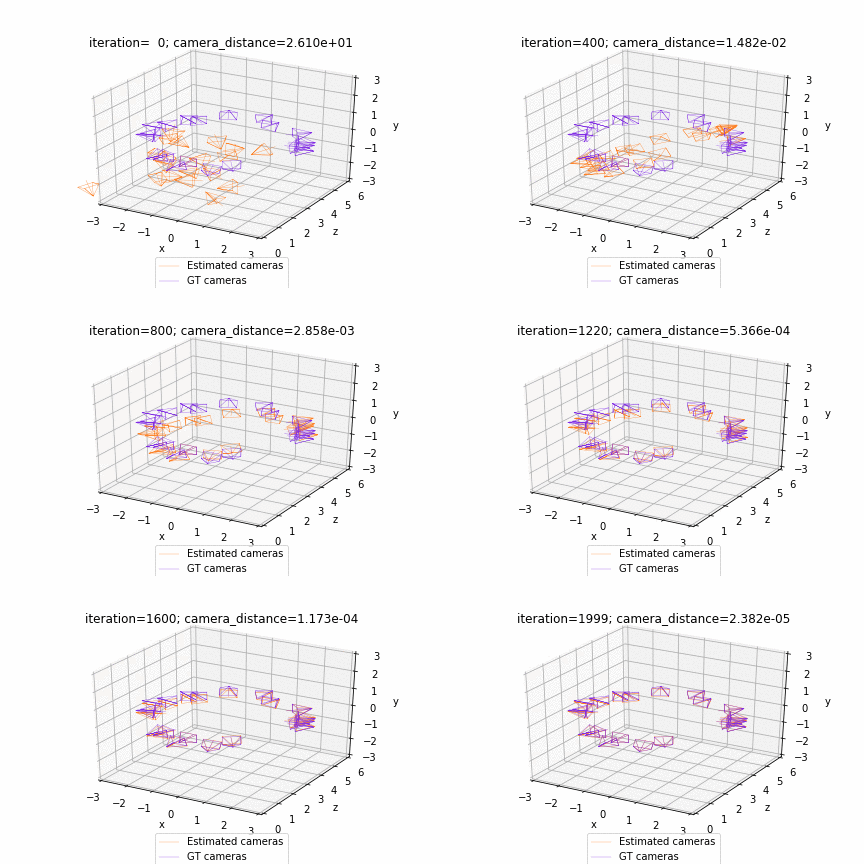
| Deform a sphere mesh to dolphin | Bundle adjustment |
 |
 |
|---|---|
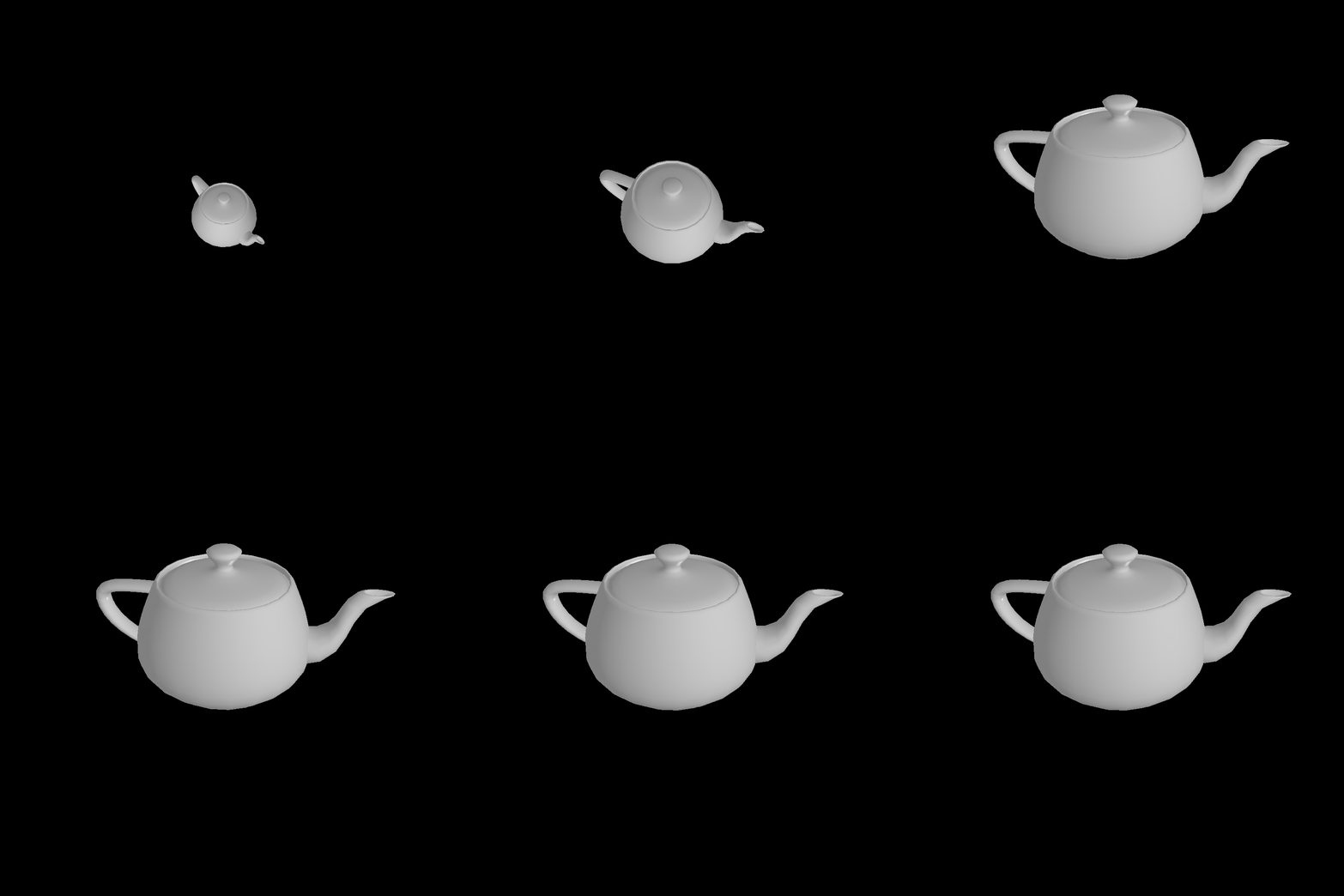
| Render textured meshes | Camera position optimization |
 |
 |
|---|---|
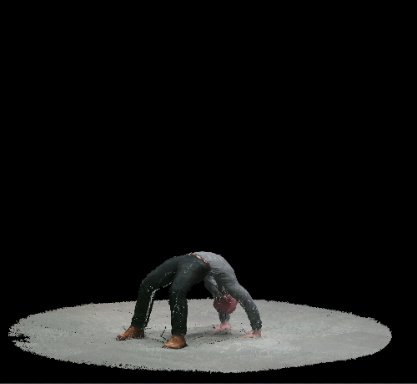
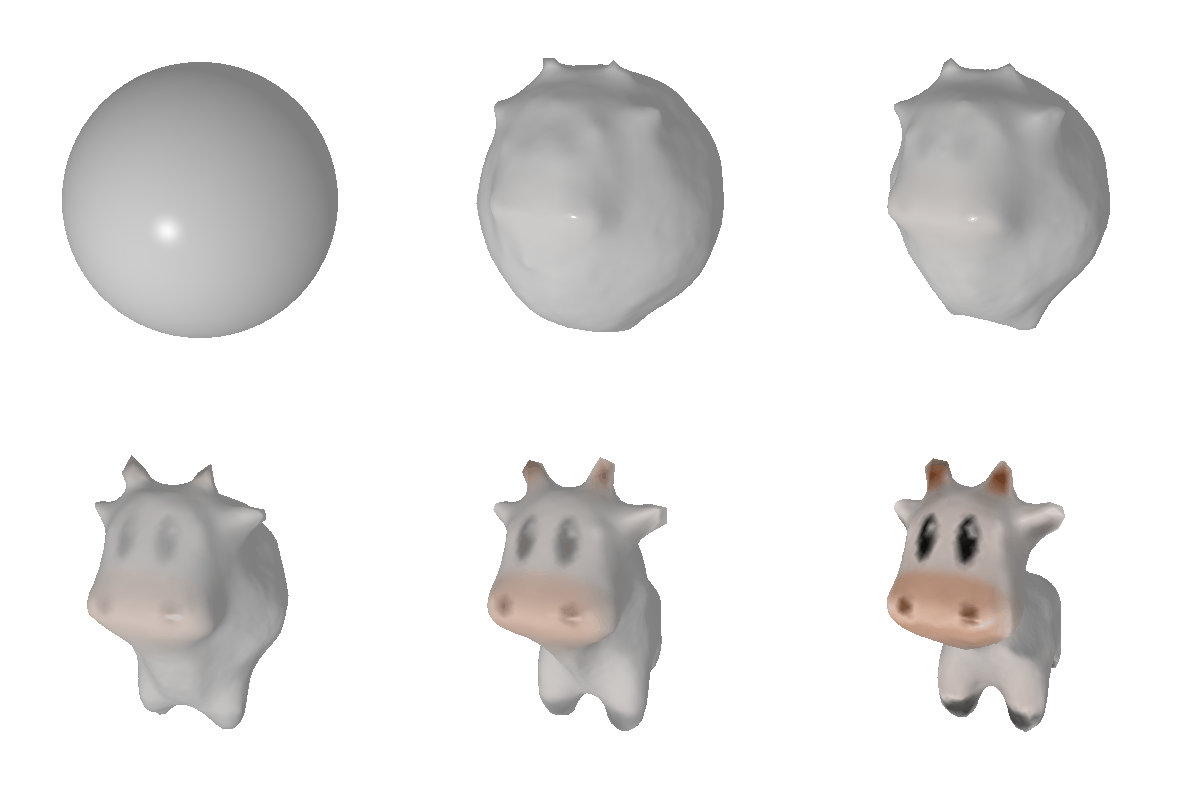
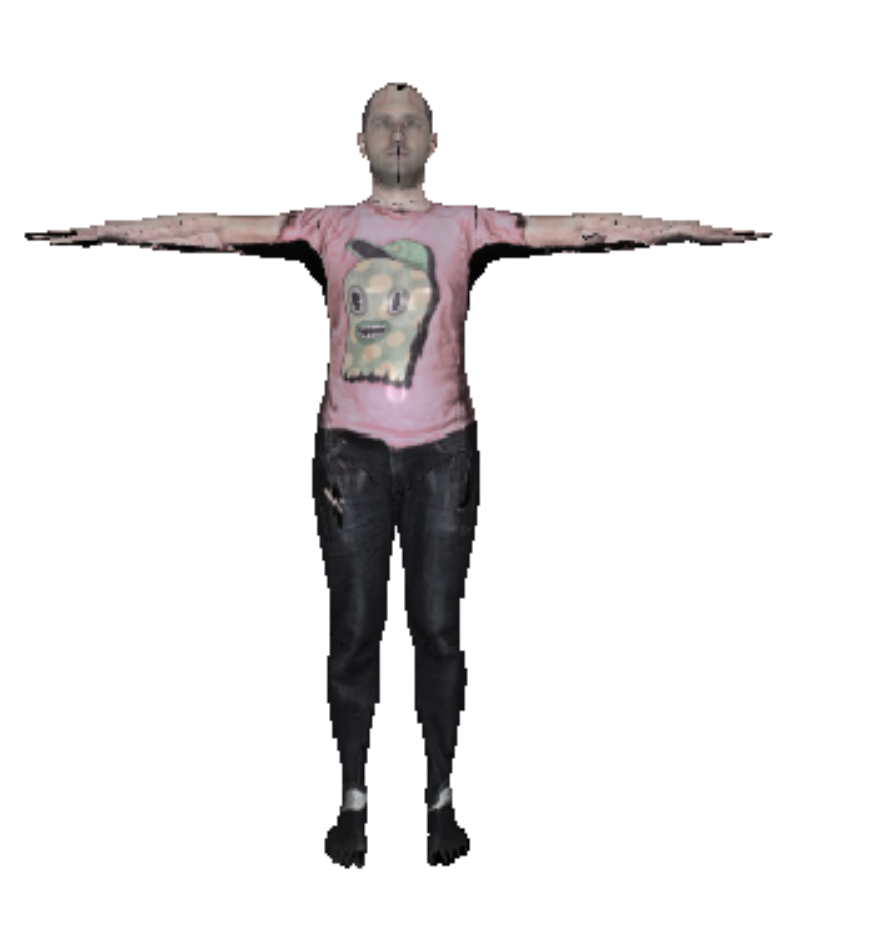
| Render textured pointclouds | Fit a mesh with texture |
 |
 |
|---|---|
| Render DensePose data | Load & Render ShapeNet data |
 |
 |
|---|---|
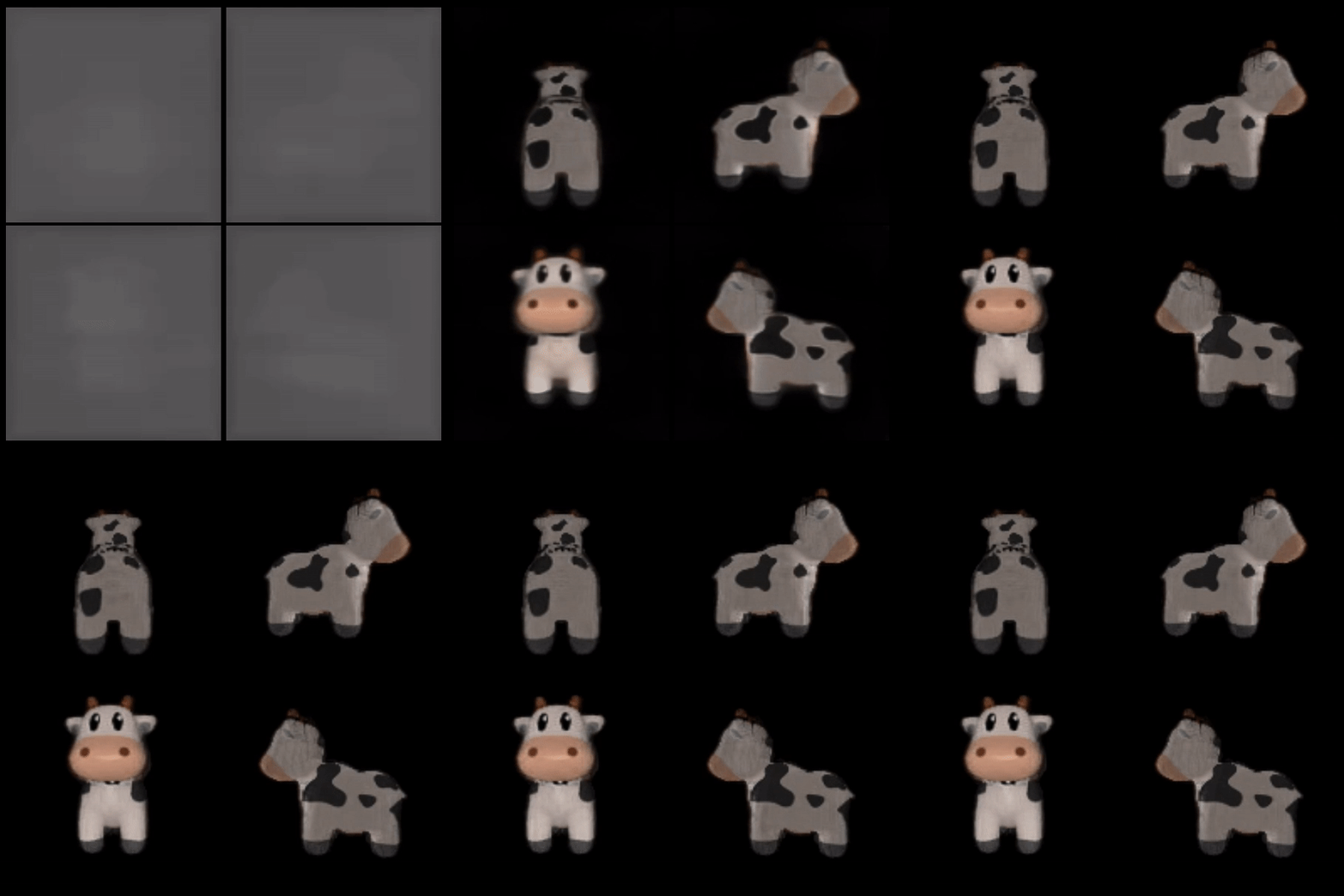
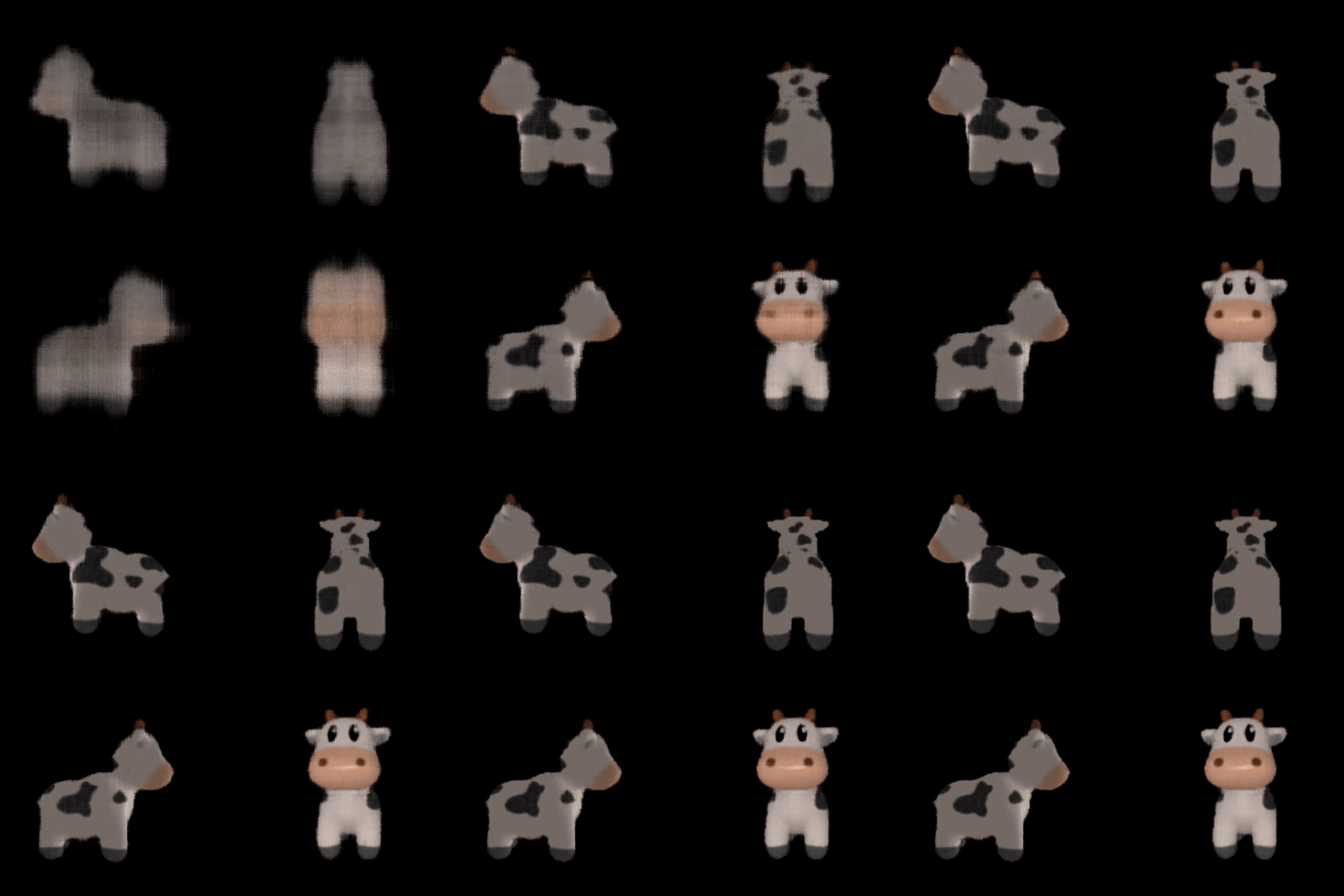
| Fit Textured Volume | Fit A Simple Neural Radiance Field |
|
 |
|---|---|
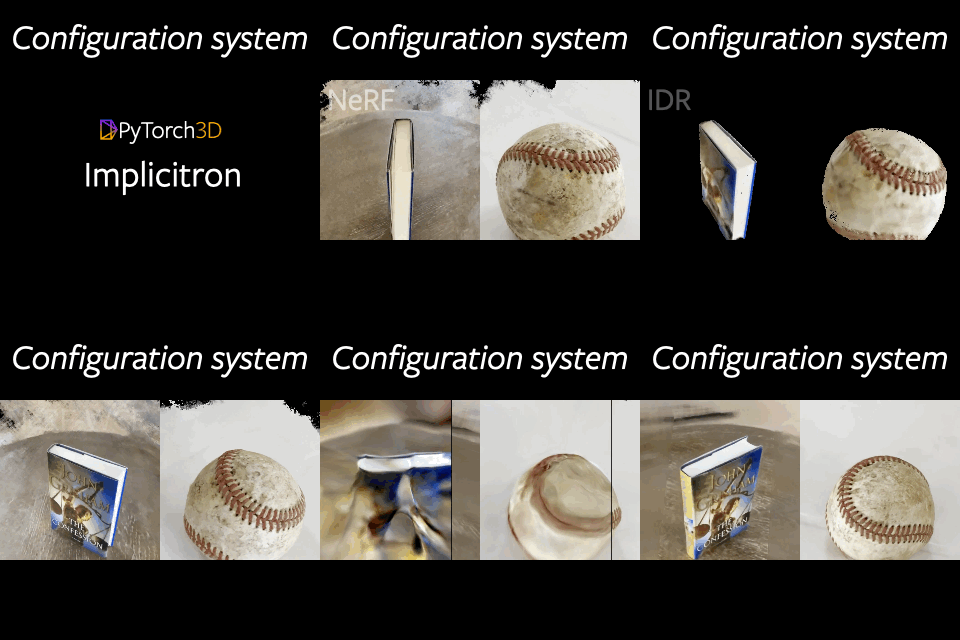
| Fit Textured Volume in Implicitron | Implicitron Config System |
Documentation
Learn more about the API by reading the PyTorch3D documentation.
We also have deep dive notes on several API components:
Overview Video
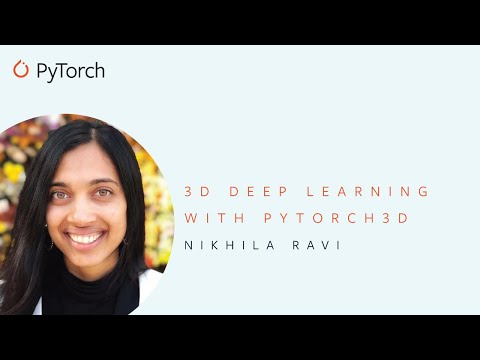
We have created a short (~14 min) video tutorial providing an overview of the PyTorch3D codebase including several code examples. Click on the image below to watch the video on YouTube:
Development
We welcome new contributions to PyTorch3D and we will be actively maintaining this library! Please refer to CONTRIBUTING.md for full instructions on how to run the code, tests and linter, and submit your pull requests.
Development and Compatibility
mainbranch: actively developed, without any guarantee, Anything can be broken at any time- REMARK: this includes nightly builds which are built from
main - HINT: the commit history can help locate regressions or changes
- REMARK: this includes nightly builds which are built from
- backward-compatibility between releases: no guarantee. Best efforts to communicate breaking changes and facilitate migration of code or data (incl. models).
Contributors
PyTorch3D is written and maintained by the Facebook AI Research Computer Vision Team.
In alphabetical order:
- Amitav Baruah
- Steve Branson
- Krzysztof Chalupka
- Jiali Duan
- Luya Gao
- Georgia Gkioxari
- Taylor Gordon
- Justin Johnson
- Patrick Labatut
- Christoph Lassner
- Wan-Yen Lo
- David Novotny
- Nikhila Ravi
- Jeremy Reizenstein
- Dave Schnizlein
- Roman Shapovalov
- Olivia Wiles
Citation
If you find PyTorch3D useful in your research, please cite our tech report:
@article{ravi2020pytorch3d,
    author = {Nikhila Ravi and Jeremy Reizenstein and David Novotny and Taylor Gordon
                  and Wan-Yen Lo and Justin Johnson and Georgia Gkioxari},
    title = {Accelerating 3D Deep Learning with PyTorch3D},
    journal = {arXiv:2007.08501},
    year = {2020},
}
If you are using the pulsar backend for sphere-rendering (the PulsarPointRenderer or pytorch3d.renderer.points.pulsar.Renderer), please cite the tech report:
@article{lassner2020pulsar,
    author = {Christoph Lassner and Michael Zollh\"ofer},
    title = {Pulsar: Efficient Sphere-based Neural Rendering},
    journal = {arXiv:2004.07484},
    year = {2020},
}
News
Please see below for a timeline of the codebase updates in reverse chronological order. We are sharing updates on the releases as well as research projects which are built with PyTorch3D. The changelogs for the releases are available under Releases, and the builds can be installed using conda as per the instructions in INSTALL.md.
[Oct 31st 2023]: PyTorch3D v0.7.5 released.
[May 10th 2023]: PyTorch3D v0.7.4 released.
[Apr 5th 2023]: PyTorch3D v0.7.3 released.
[Dec 19th 2022]: PyTorch3D v0.7.2 released.
[Oct 23rd 2022]: PyTorch3D v0.7.1 released.
[Aug 10th 2022]: PyTorch3D v0.7.0 released with Implicitron and MeshRasterizerOpenGL.
[Apr 28th 2022]: PyTorch3D v0.6.2 released
[Dec 16th 2021]: PyTorch3D v0.6.1 released
[Oct 6th 2021]: PyTorch3D v0.6.0 released
[Aug 5th 2021]: PyTorch3D v0.5.0 released
[Feb 9th 2021]: PyTorch3D v0.4.0 released with support for implicit functions, volume rendering and a reimplementation of NeRF.
[November 2nd 2020]: PyTorch3D v0.3.0 released, integrating the pulsar backend.
[Aug 28th 2020]: PyTorch3D v0.2.5 released
[July 17th 2020]: PyTorch3D tech report published on ArXiv: https://arxiv.org/abs/2007.08501
[April 24th 2020]: PyTorch3D v0.2.0 released
[March 25th 2020]: SynSin codebase released using PyTorch3D: https://github.com/facebookresearch/synsin
[March 8th 2020]: PyTorch3D v0.1.1 bug fix release
[Jan 23rd 2020]: PyTorch3D v0.1.0 released. Mesh R-CNN codebase released: https://github.com/facebookresearch/meshrcnn